





Logistics and forwarding companies in Romania achieved a total turnover of €4.397 billion in 2023, down from €5.170 billion in 2022 – but 2022 was a good year, above expectations, especially due to the increase in trade after the end of the pandemic and to the record sea and air transport rates – or €4.523 billion in 2021. We experienced a decrease in consumption in Romania, amid rising inflation and all kind of uncertainties, so most customers of logistics companies, regardless of the industry they are part of, had lower sales, often by double-digit percentages. Even if some producers/traders have recorded increases in income, most of the time this does not mean that the volumes also have increased, but only that prices have been indexed. As for the profit of logistics and shipping companies, it was higher in 2023, €391.90 million, compared to 374.20 and 286.90 million euros in 2022 and 2021, respectively. The figures show that some operators have managed to recalibrate their resources according to the number of orders, remaining profitable, even if the volumes decreased and the costs increased, especially those related to personnel and rents. They have also found ways to be more efficient: solar panels or increasingly modern IT systems and, in some cases, automation.
The post-Covid market is constantly changing. That’s why logistics companies, but also companies in other industries, are constantly forced to adapt to new economic and geo-political conditions and to increasingly strict regulations to reduce emissions. Under these circumstances, those with a rich portfolio of services seem to win, because customers can choose between various modes of transport, taking into account the criteria that interest them most: sometimes the speed of delivery, sometimes the lowest rate. Freight movements often take place between maritime and rail transport: the first one has again been characterised in recent months by a lack of predictability and fare increases, which is likely to encourage trains or planes, and the second one benefits from the use of online platforms and trade with China, which is driving more and more flights from Asia-Pacific to North America and Europe.
Operators who have customers from several industries also have advantages because, when the automotive, construction or interior design market decreases, they rely on agriculture, fashion or, most certainly, on food, where the volumes are maintained even in crisis, although we may see changes in consumer behaviour.
In these pages we present the traditional analysis of the main economic indicators for 2023 of Romanian companies that have CAEN codes 5229 (transport-related activities), 5210 (storage) and 5221 (service activities for road transport, especially companies that have railway and maritime terminals or that make road shipments).
Almost the entire turnover in the industry is due to the companies in Top 100
The top 400 logistics companies in Romania in terms of turnover had total revenues of €3,833,229,968 in 2023, compared to €3,995,571,316 for the same companies in 2022 and to €4,256,253,831, as the first 400 companies in the 2022 ranking had.
It should be noted that in case of the companies that have several divisions – DSV (DSV Solutions, DSV Air & Sea and DSV Road), DHL (DHL Logistics and DHL Freight) or H.Essers (which, in addition to the transport company, also has H.Essers Distribution, H.Essers Mobiliare and H.Essers Expediții – we have taken into account the total results to establish the general ranking, even if they operate as independent entities, which declare their financial indicators separately.
A large part of the turnover achieved by the top 400 companies, €3,293,367, belongs to the companies in top 100, which in 2022 had slightly more, €3,325,218. The companies that in 2022 were in Top 100 by turnover had €3,392,794,965.
Six companies had revenues of over €100 million…
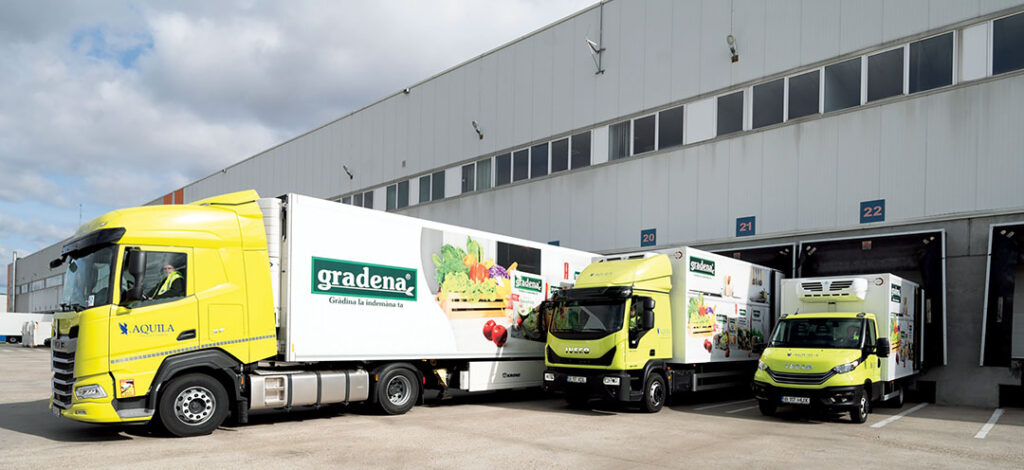
… and the leader of the ranking is, as in 2022, Aquila, with 484.79 million euros, which also includes commercial activities. The company has a comprehensive business model, with production, distribution, logistics and transport, and sells, in over 72,000 outlets, more than 10,000 personal care products, sweets, coffee, cleaning, pet food, hygiene, frozen and canned vegetables, vegetable cream and whipped cream, fish and fish dishes, etc. In addition, in recent years, Aquila has taken over several production and distribution companies in Romania and the Republic of Moldova, becoming one of the most important players in Romanian retail, with local capital. Aquila announced in December 2024 the conclusion of an agreement for the acquisition of KITAX Kft, one of the five most important distribution companies in Hungary in the field of hygiene and cleaning products, which has a diversified portfolio, including over 10,000 products from more than 400 leading global suppliers. The company’s logistics infrastructure is modern, including a fleet and its own 3,000 m2 warehouse in Mosonmagyaróvár, where 70% of the energy used is green energy.
Next are five companies – Havi Logistic, which also has commercial activities, Schenker Logistics, the companies in the DSV group, Transmec and Kuehne + Nagel – which have also exceeded 100 million euros. Schenker therefore continues to have the highest revenues among freight forwarding and logistics companies, although it had a large contraction in volumes as a result of the restructuring of the organization in Romania and in the entire region, amid the decision of the Deutsche Bahn Group to sell DB Schenker – which in the meantime has decided, in favour of the Danish company DSV.
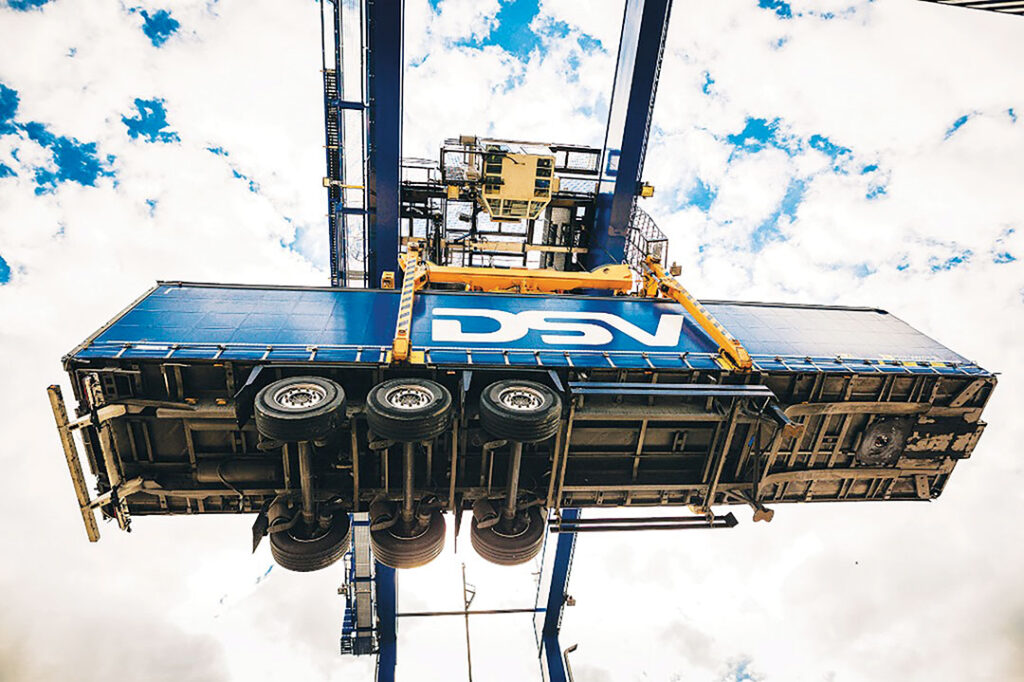
DSV, analysed this year with the total of its companies Road, Air & Sea and Contract Logistics, had a consolidated turnover of €140,352,072 and is therefore ahead of Kuehne + Nagel, Transmec, Gebrüder Weiss and cargo-partner Expediții, which were ahead of DSV Solutions in 2022. (In 2022 DSV Solutions was still integrating DSV Road together with the Contract Logistics company.) DSV Solutions had a turnover of €74.54 million in 2023, 17% below the one in 2022: €89.38 million. DSV Air & Sea had €38.22 million and €50.88 million (-25%) respectively and an operating profit of around €3.64 million, compared to €4.45 million, and focused a lot in 2023 on air transport, becoming the leader of the Romanian air & sea market. Air transport contributes 60% to the company’s revenues and performed better than maritime transport in 2023, and apart from these two services, customs clearance and cargo handling are also offered in customs warehouses in ports and airports and Cargo insurance. DSV Road had €27.57 million in 2023 and in 2022 it had not yet become an independent entity – so all three companies separated from the group also enter separately in Top 30 by revenue. As for DSV Road, it was a good year due to the increase in the number of customers and in the demand for groupage and intermodal and to the fact that it was the best year for the import and export of Romanian agriculture. So, the demand for the transport of fertilizers and agricultural machinery was 30% higher than in 2022, and the import of organic fertilizers was also higher due to the drought. The company has achieved 20% of its turnover in agriculture and considers this to be the new engine of growth in transport, along with automotive. That’s why it aims to support the development of agriculture through groupage and oversized transport.
DSV is followed by Transmec, with €108,781,589, compared to €121,772,514 in 2022, which, unlike in 2022, is ahead of Kuehne + Nagel (€103,876,976). However, Transmec could register volume decreases in the coming years as a result of increased competition in the intermodal transport segment, by the opening of new terminals in Bihor and Arad.
In 2022, Gebrüder Weiss also exceeded the threshold of €100,000,000, with €115,690,069, compared to €94,375,971 in 2023.
The only one of these seven companies that had a higher turnover in 2023 than in 2022, +13%, is Aquila, while Schenker and Transmec each fell by 11%, DSV by 41%, Kuehne + Nagel by 30%, and Gebrüder Weiss by 18%. In case of GW, as well as DSV Air & Sea and K+N, the decrease in turnover is primarily caused by the return to normal of the air and sea freight rates, which had reached record levels during the pandemic. Gebrüder Weiss had 10% more air transports in 2023 than in 2022, but the volumes decreased slightly, and the 2023 fares, below the 2022 benchmarks, also affected the turnover and profitability. In the near future, the company aims to expand the range of specialized products it deals with, for example, the air transport of dangerous goods, for which it was one of the first shippers with an operating license in Romania, and to develop the transport of pharmaceutical products, for which it has accreditation both globally and locally. In addition to logistics and transport, GW has also been offering Home Delivery for bulky goods since 2018, for which it has a network of hubs strategically located in Romania, and which last year carried out almost 130,000 transports, 1.14% more than in 2022, with a weight of over 4% higher, of about 36,000 tons, especially furniture and Home & Deco. In 2023, this service was strengthened, visibility among customers increased, new partners were attracted, and the fleet was expanded with seven electric trucks, which reduce greenhouse gas emissions and noise pollution.
Four other companies had revenues of over €70 million, including Quehenberger, the leader of the Romanian Contract Logistics market, which had a turnover 9% lower than in 2022, from €81.30 to 73.66 million, and a profit of €4.40 million, compared to 5.28 in the previous year. But the drop could have been even greater, given the fact that the volumes of all customers decreased, in some cases by 35-40%, if a new large customer from the fashion industry and several smaller ones had not been added to the portfolio.
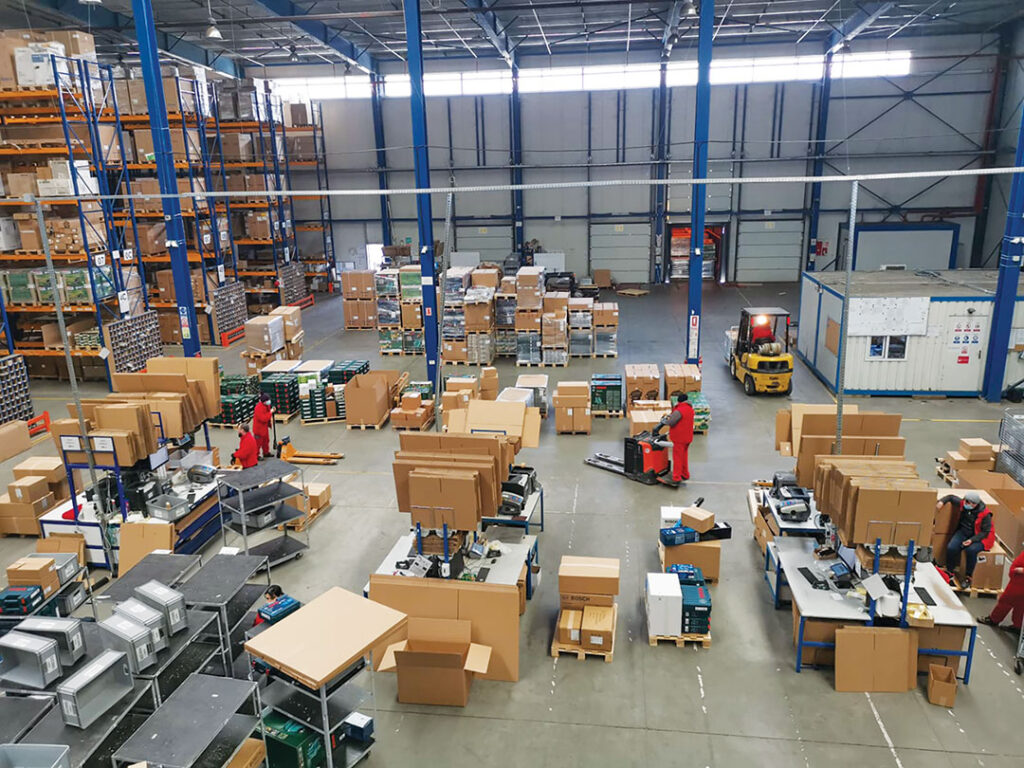
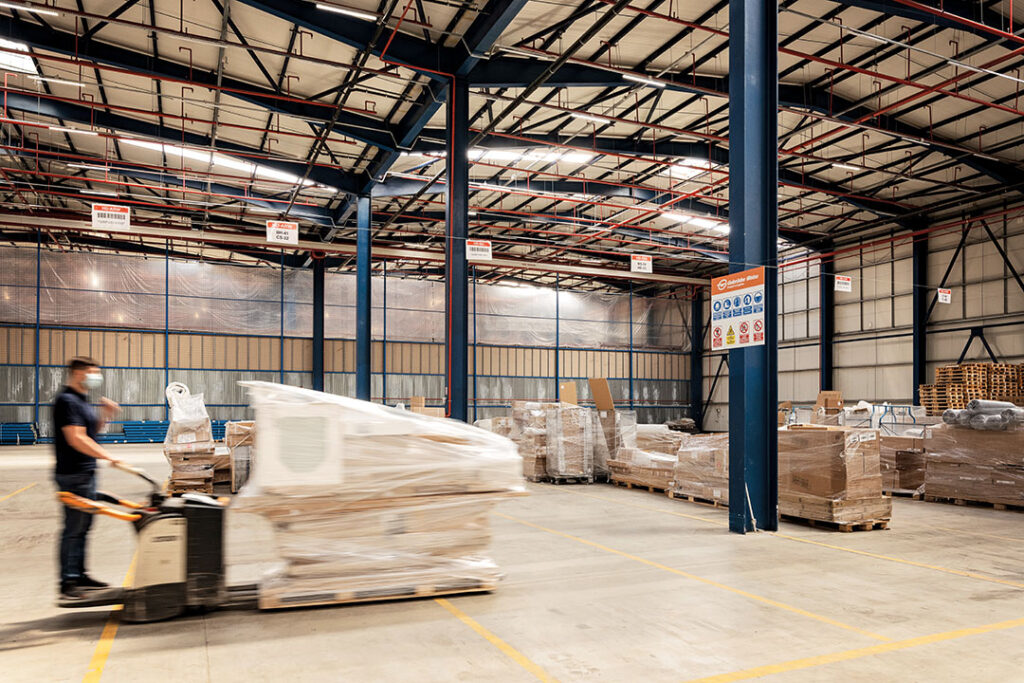
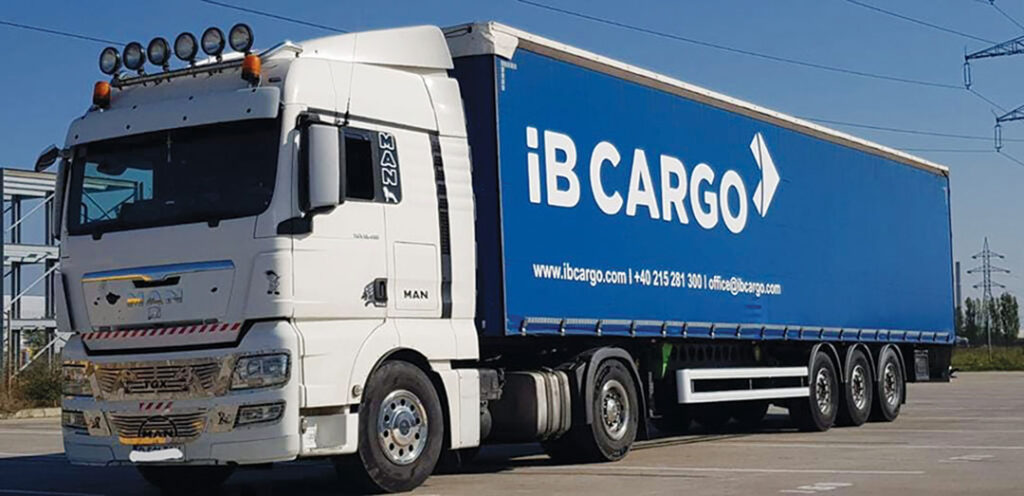
Five other companies had more than €50 million, including IB Cargo, which increased its road transport volumes by 20% in 2023, despite the decline in the European market as a whole, due to the package of services offered in case of long-term contracts. A package that made spot customers switch to closer collaborations. Rail transport, included in IB Cargo’s offer in 2022, was an advantage precisely because it is part of a complete package, from which the customer can choose what benefits him more in terms of transit times, cost, etc. The company has recently also offered Contract Logistics in a warehouse that in 2023 has grown from 76,000 to 100,000 m2, dedicated to a single customer, and is still looking for similar projects. In addition, efficiency has been increased thanks to investments in automatic inventory robots and other innovative systems, WMS optimization, the switch to trailer hub (a system that involves the use of more semi-trailers than trucks, so that the latter can travel a greater number of kilometres), and the installation of solar panels. Compared to 2022, the average number of trucks loaded/unloaded per week at the furniture warehouse operated by IB Cargo in partnership with Maersk was higher, 300-350, with a peak of 400 in the last quarter, which allowed for a more efficient use of resources and better ramp rotation.
cargo-partner Expediții also had over €60 million in turnover, but this company brought one of the most notable changes in Top compared to 2022, because of a decrease from €92.21 to 61.51 million, caused in particular by the decrease in weight and air transport fares – otherwise, the number of orders was higher than in 2022. The percentage drop in revenue, 33%, is the largest among the Top 30 companies, on par with that of Elvada Company and before that of 30% of Kuehne + Nagel. The companies that were behind cargo-partner in 2022 and have since overtaken it are DHL, Yusen, DSV Solutions, Quehenberger, IB Cargo, Lincor and H.Essers.
Seven other companies had over €30 million in turnover, 47 over €10 million, the rest had less, and the Top 100 logistics companies ordered by turnover closes with one company with €6.98 million.
51 companies in Top 100 had higher revenues than in 2022
Aquila has the highest growth, €56.56 million, followed at a great distance by Havi (28.92), Ceva (18.18) and IDL Bucharest (11.05). Nine other companies had increases of over five million euros, 25 over one million euros, seven over €500,000, four over €100,000 and three had smaller increases.
On the other hand, the companies with the largest revenue decreases compared to 2022 were Kuehne + Nagel, €44.86 million, followed by Calberson (33.93), cargo-partner Expediții (30.69) and GW (21.31). Five other companies had decreases of over €10 million and the rest up to 49 companies, smaller decreases.
The seven companies with the biggest revenues have also the biggest averages for five years
In logistics, the volumes of activity and implicitly the revenues are more constant over the time than in transport, because the storage contracts, and implicitly those for value-added services, are signed for longer periods. That’s why the first seven places in the top according to the five-year average of turnover are occupied, in the same order, by the top seven companies in the ranking by turnover.
Aquila also had the highest average turnover in 2019-2023, 359.44 €million, followed by Havi (173.41), Schenker (140.03) and the companies of the DSV group (109.61). Another 10 logistics companies had over €50 million, another 40 had over €10 million, another 39 had over five million euros, and seven had lower averages – the lowest among the companies in Top 100 by revenues had €2.54 million.
95 companies in Top 100 by turnover made a profit…
… and the total value of the profit is €137.14 million, compared to €147.80 million in 2022. Aquila leads in this ranking too, with €18.31 million, followed, at a great distance, by three companies with over six million euros – Lincor Trans, Kuehne + Nagel and Silotrans – by two with over five million euros – Ceva and Karl Heinz Dietrich – by two others with over four million euros, four with over three million euros, four with over two million euros, 22 with over one million euros, 19 with over €500,000, 32 with over €100,000 and six with lower profit.
The highest profit margins among companies with high turnover and over 30 employees belong to ECS Logistics, 68%, followed by Beta Intertrans (47%), Tomat Prod Impex (40%) and Medrom Logistics (39%). Six other companies had over 20%, another 19, over 10%, and another 18, over 5%.
43 companies in Top 100 by turnover had a bigger profit in 2023 compared to 2022
The largest profit increase compared to 2022 belongs to Ceva, €5.81 million, followed by Lincor Trans (4.38), Karl Heinz Dietrich (3.66), Silotrans (3.24), Aquila (2.49), Frial (2.12), Ecologistics Corporation (1.09) and Green Forwarding (1.07). Nine other companies had a higher profit than in 2022 by over €500,000, another 18 by over €100,000, and nine others by less than €100,000.
Out of the 57 companies that had a lower profit than in 2022, the ones in DHL group (-3.83 million euros), GW (-2.14), cargo-partner Expediții (-2.04), Kuehne + Nagel (-1.95), the companies in DSV group (-1.46) and Calberson (-1.02) decreased the most.
Aquila also leads in the ranking of average profits over the last five years, with €11.82 million, followed at great distance by Schenker (5.34), Kuehne + Nagel (4.44), the companies of DHL group (4.22), Karl Heinz Dietrich (3.33), the companies of DSV group (3.23) and Silotrans (3.13). Five other companies had an average profit of over two million euros, another 16, an average of over one million euros, and the rest had lower values.
86 logistics firms in the Top 100 by revenue made a profit in each of the last three years.
Aquila also leads in the EBITDA ranking with €35.53 million, followed at great distance by Karl Heinz Dietrich, with €9.20 million, Lincor Trans (8.87), Kuehne + Nagel (8.68). Grampet Logistics (8.45) and Transmec (7.74). Another eight companies had over three million euros, another 16, over two million euros, and another 33, over one million euros.
Huge loss for Schenker
The five companies that had losses totalled €32,154,314, compared to €6,539,053, the same companies in Top 100 by turnover that had losses in 2022. Schenker alone had a loss of €29.34 million, Raben had €1.52 million, and the other three had between €150,064 and €476,151 each.
Schenker had in 2023 its only loss in recent years. Raben, on the other hand, had losses in 2019-2021 and it was even the leader in the loss ranking in 2022, but in 2023 it had a smaller loss. The company has constantly increased its turnover in six years on the Romanian market, due to the increase in the number of cross dock centres and volumes – by about 40%/year – but it has not yet made a profit, because it is difficult to collect goods for export in our country. But Raben, who focuses mainly on groupage transport and also wants to develop Contract Logistics, estimates that it will soon reach a profit in a year or two. However, being a relatively new company on our market, it is in full development and it has not been affected by the volume decreases that many of its competitors experienced.
65 companies in Top 100 by turnover increased their assets
Logistics companies in Romania had total assets worth €1.758 billion in 2023, compared to €1.736 billion in 2022, so they continued their growth of about 200 million euros that they had in the previous year. A large part of this value is due to the Top 100 companies by assets, €1,205.98 million, compared to €1,158.67 million in 2022. While the top 30 companies have €823,505,440 in 2023 and €821,173,478 in 2022 and most of them are, as in previous years, subsidiaries of multinational companies.
However, in first place is a Romanian company, Aquila, which has assets of €200.34 million, at great distance from Schenker and GW, with €69.52 and €67.70 million, respectively, and Transmec, with €42.24 million. Three other companies – Silotrans, Lincor and Ceva – have assets of over €30 million, another eight over €20 million, another 16 over €10 million and another 25 over five million euros. The rest of the companies have assets of over one million euros, except for Elma Eurotrade, which has €840,506.
65 companies had higher assets than in 2022 and the biggest difference is the one of the companies in DSV group, €31.09 million, Aquila, €29.89 million, and GW, €23.68 million. Far away from them are the companies in DHL group, with €13.98 million, then three other companies that have grown by more than five million euros, three that have increased by more than four million euros, another three, by more than three million euros, five with differences of more than two million euros, 12 with over one million euros and the rest, with smaller differences.
At the opposite pole, the largest decrease in assets is the one of Heinz Karl Dietrich, €80.75 million, from €92.63 to €11.88 million. It is followed by Calberson, with a decrease in the value of assets compared to 2022 of €9.79 million, and at great distance Gopet, with €3.71 million, then three companies with decreases of more than two million euros, eight with more than one million euros and the rest, with smaller decreases.
Aquila has also the highest average assets over the last five years, €143.90 million, followed at great distance by Karl Heinz Dietrich, which fell a lot in 2023, but had high values in previous years, and reached an average of €76.32 million, and Schenker, with €68.78 million. Six other companies had average assets of more than €20 million, another 16 had an average of more than €10 million, another 18 had more than five million euros, another 30 had more than three million euros, another 26 had more than one million euros, and the remaining two companies had lower averages.
Lincor Trans had the biggest revenue/employee
The companies in Top 100 by turnover that declared their number of employees in 2023 had between two employees (Elma Eurotrade) and 2,544 employees (Aquila). The Ploiești-based company is followed in the ranking by the number of employees by Yusen, with 1,421, Kuehne + Nagel, with 981, Schenker, with 903, by four other companies with over 500 employees, 26 with over 100, 17 with over 50 and the rest with fewer.
The highest revenues/employee among the companies that declared that they have more than 30 employees are Lincor Trans, 2.08 million euros/employee/year, followed at great distance by All Cargo Expres, with €727,000/employee/year, Transfer Internacional Spedition (€713,000), Quattro Intersped (€666,000), DSV Air & Sea (€635,000), DHL Logistics (€597,000), IB Cargo (€529,000) and Inland Shipping (€528,000). Six other companies had over €300,000/employee/year, another seven, over €200,000/employee/year, another 23, over €100,000/employee/year, and the rest, less than that.